
On this page
- Start with the existing insulation, not its age
- Moisture, pests, or suspect material need a different first step
- Check whether air sealing can happen before coverage is added
- Confirm ventilation paths and attic access limitations
- Understand what R-value and depth do, and do not, tell you
- Compare the scope before comparing the total
- Details to confirm before approving attic insulation work
- Plan the handover before work starts
An attic insulation upgrade in Mississauga should begin with an assessment of the existing attic, not a decision to add a set depth of material. Suitable existing insulation can sometimes remain and receive a top-up, but uneven coverage, air leaks, moisture clues, restricted access, or unclear material can change the scope. Checking these details first helps you compare proposals based on the work your home actually needs.
At Mississauga Insulation, we provide attic insulation, top-ups, blown-in insulation, inspections and assessments, air sealing, ventilation planning, and removal and replacement work. The right starting point is understanding what is overhead, what can be accessed, and what needs attention before a new insulation layer makes those details harder to reach.
Start with the existing insulation, not its age
Old insulation is not automatically insulation that must be removed. The more useful questions are whether the material is identifiable, dry, reasonably continuous, and suitable to retain as part of the planned assembly.
Coverage can vary considerably across one attic. Material near the hatch may look different from material at low eaves, above an addition, or in a separate roof space. A single depth measurement or a photo from the access opening cannot establish consistent coverage throughout the attic.
A top-up can be a sensible scope when existing insulation is suitable to keep and the attic can be prepared for the additional layer. It is not simply a matter of adding material over every condition. Our attic insulation top-up service explains the retain-or-remove decision, preparation work, and details that should appear in a written proposal.
When a top-up should pause for further investigation
New insulation should not cover an unresolved problem. Signs such as active water entry, damp or damaged material, a known pest issue, or unknown material need a different first step. A roof or moisture issue needs its cause addressed before insulation work proceeds. Suspect vermiculite is also a stop point: it should not be disturbed for a routine insulation enquiry, because it may contain asbestos and requires appropriate professional assessment.
Pause before covering
Moisture, pests, or suspect material need a different first step
Do not cover active water entry, a known pest issue, or suspect vermiculite with new insulation. The underlying condition needs appropriate assessment and resolution before ordinary insulation work is planned.
Check whether air sealing can happen before coverage is added
Insulation slows heat flow. It does not automatically stop air leakage between the living space and an unconditioned attic. Accessible ceiling-level openings, service penetrations, and the attic hatch can be important details to identify before they are buried beneath additional insulation.
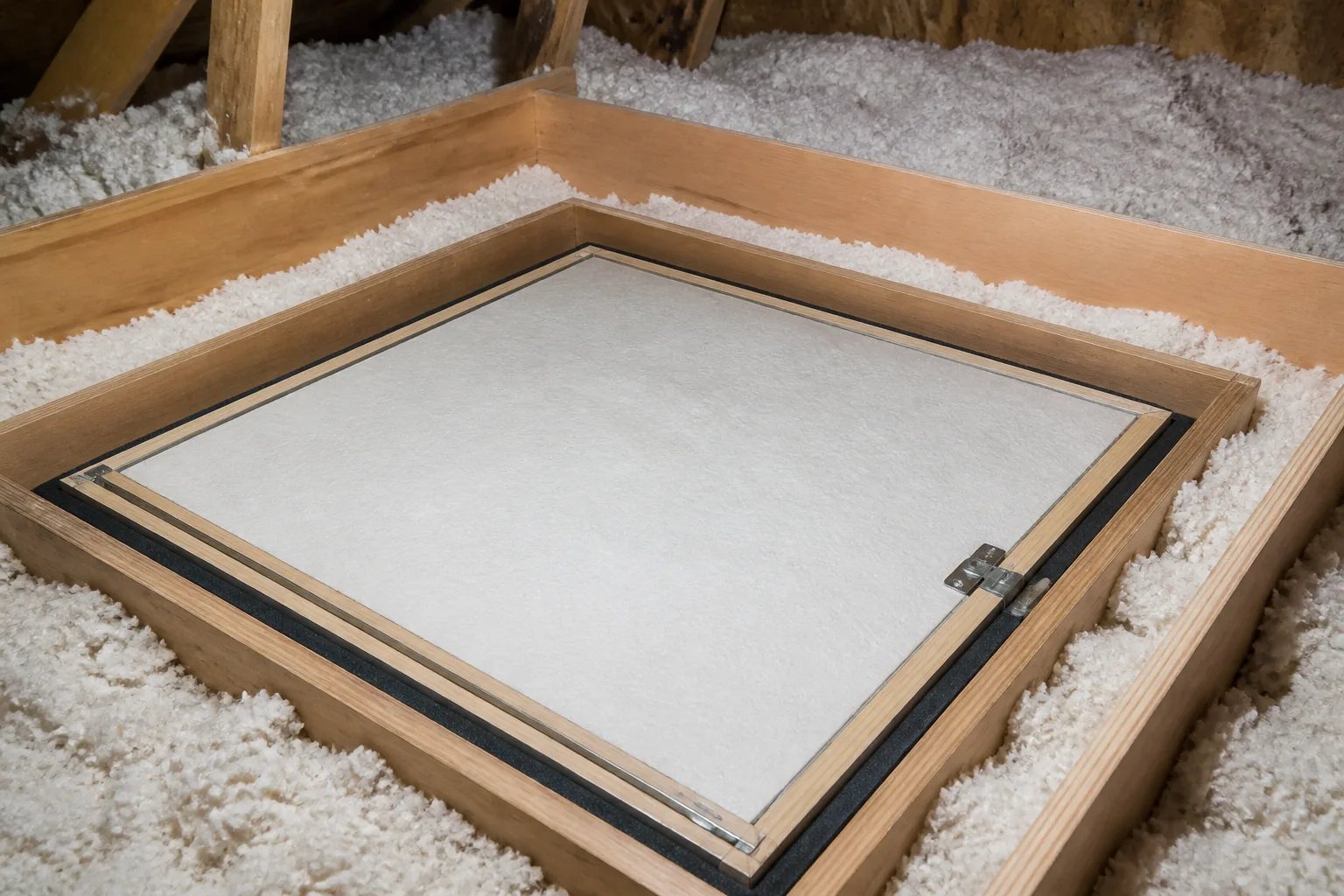
Air sealing and attic ventilation have separate jobs. Air sealing addresses unintended movement of indoor air through the ceiling boundary. Ventilation planning concerns the intended airflow route through a vented roof space. A complete scope should not treat these as interchangeable or assume that adding insulation solves both.
The attic hatch deserves its own discussion. The panel insulation, perimeter seal, closure, fixed frame, and loose-fill containment around the opening are related but distinct details. If loose-fill insulation is planned, a containment dam may be needed so material does not spill into the access opening when the hatch is used later.
Our attic air sealing information outlines the accessible areas and hatch details worth clarifying before installation. It is also useful to ask what cannot be reached, what material may need to be moved locally for preparation, and how disturbed coverage will be restored.
Confirm ventilation paths and attic access limitations
In a conventional vented attic, added insulation must be planned around the roof’s intended ventilation route. Eaves, baffles, low-clearance edges, and roof intersections can require attention so the proposed insulation level does not obstruct the intended path. The right approach depends on the actual roof assembly, not a generic assumption that more ventilation openings will solve every attic concern.
Access also shapes the proposal. A bungalow may have a broad open attic floor, while a split-level home, rear addition, or partly finished roof space can create separate zones, tight edges, or more than one access point. A two-storey home’s living area is not necessarily its attic insulation area.
Before accepting a quote, ask which roof spaces are included, which are inaccessible or excluded, and whether an area estimate will be confirmed on site. If a home is a townhome or condominium, it can also be necessary to clarify who has authority for work affecting a shared assembly.
For more detail on the relationship between insulation and roof-space airflow, see our attic ventilation planning guide.
Understand what R-value and depth do, and do not, tell you
R-value describes thermal resistance, while depth is a physical measurement. They are connected, but there is no universal conversion from inches of insulation to R-value. The material, named product, coverage requirements, installation conditions, and any settling instructions all matter.
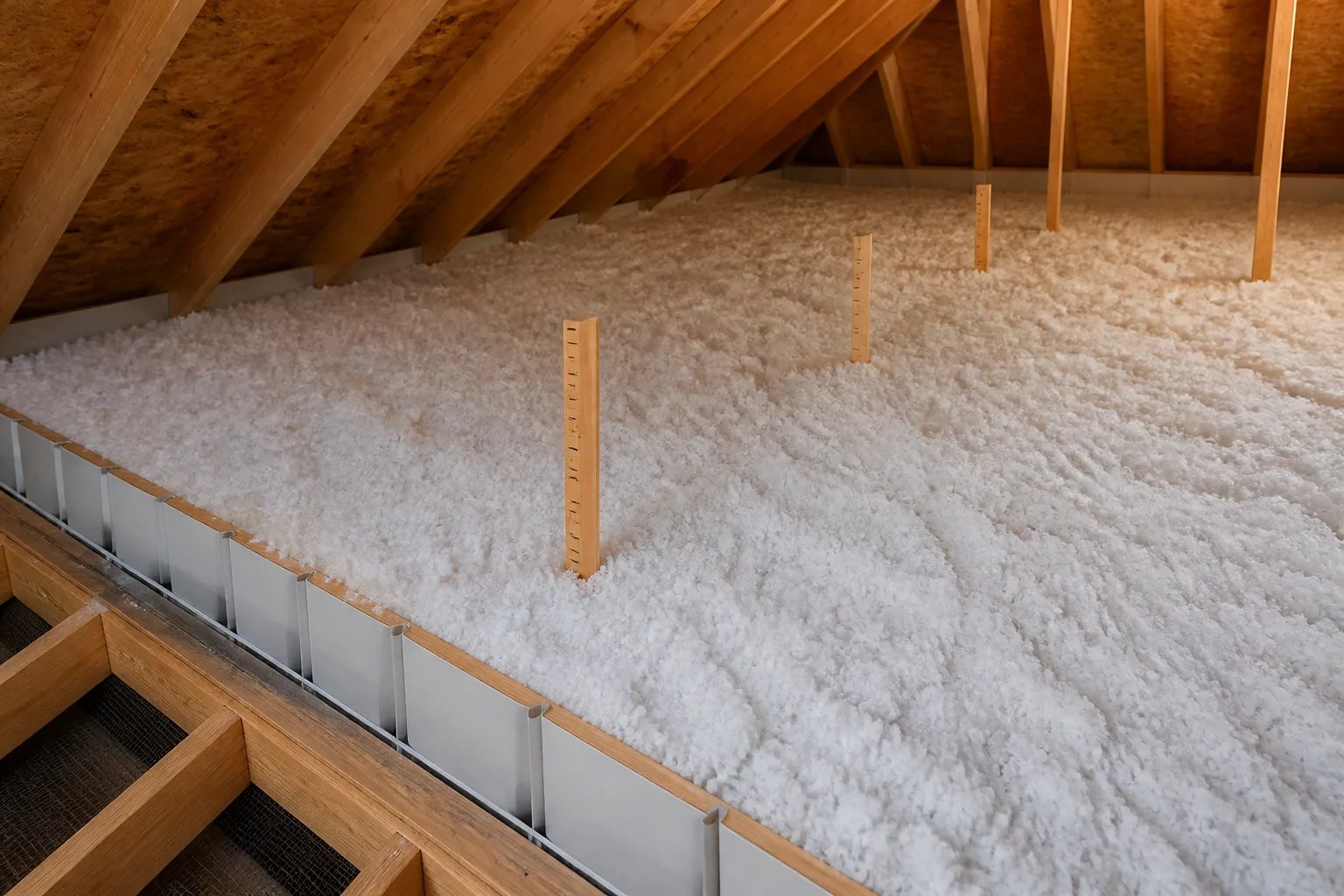
This is especially relevant for loose-fill insulation. Blown-in insulation is installed using equipment that delivers loose-fill material through a hose, but the equipment alone does not define the finished specification. A useful quote identifies the product, the attic area being treated, the intended installed level, and the applicable coverage requirements.
Ask whether the stated value represents added insulation or the intended finished total. Where an existing layer is retained, the quote should explain how its contribution was assessed rather than presenting a final figure without context. Gaps, compressed batts, uneven distribution, and framing can all affect how an assembly performs.
Our blown-in insulation page explains this installation method for suitable open attics, while our guide to R-value and insulation depth explains why depth alone is not enough for a meaningful comparison.
Compare the scope before comparing the total
Two attic insulation proposals can have different totals because they describe different work. One may include only added material, while another includes preparation, local redistribution of existing insulation, accessible air sealing, hatch work, eave details, or removal and disposal. A lower total is not automatically a better comparison if the included areas and preparation differ.

Request a written scope that separates included work, exclusions, assumptions, and any work that requires another trade. If a price is based on estimated attic area or assumed access, ask how a change will be handled and approved if on-site conditions differ.
Quote comparison checklist
Details to confirm before approving attic insulation work
Use these questions to make sure two proposals describe comparable work rather than only comparable amounts of material.
- Which attic spaces and roof zones are included, measured, estimated, or excluded?
- What existing insulation can remain, what must be corrected, and what finding supports removal if proposed?
- Which product is specified, and what installed coverage requirements apply to that product?
- Does the stated target describe added insulation or the intended finished level?
- Which accessible air leaks, hatch details, and ventilation-path preparations are included?
- What access route, protection, cleanup, and homeowner preparation are part of the scope?
- What product, area, coverage, preparation, and limitation records will be provided at completion?
- If a rebate is relevant, which party is responsible for timing, documentation, and application steps?
Rebates require a separate check. A contractor’s quoted scope and a program’s eligibility decision are not the same thing. If an incentive matters to your project, confirm the current program requirements, timing, contractor requirements, records, and payment arrangement before authorizing work. Our insulation rebate guidance can help you start that review.
Plan the handover before work starts
It is easier to agree on project records while a proposal is being prepared than to reconstruct the details after the attic is covered. At completion, useful records may include the areas treated, product used, intended coverage information, agreed preparation records, documented limitations, and approved changes to the original scope.
Ask how future attic access should be managed without unnecessarily disturbing the insulation. This matters if wiring, HVAC equipment, roofing work, or other maintenance could require someone to use the hatch later. Keep the final proposal, invoice, product information, and any program documents together for future reference.
An uncomfortable upstairs room or recurring draft can be a valuable starting observation, but insulation cannot be assumed to explain every comfort concern. Windows, sun exposure, heating and cooling distribution, and other parts of the building enclosure can also contribute. A clear description of when and where you notice the issue helps focus the attic assessment on the right questions.
The practical next step is to establish the attic’s accessible condition, define the preparation required, and obtain a scope that clearly identifies the spaces and details included. You do not need to enter the attic, move insulation, or identify the material before making an enquiry.
Helpful answers
Frequently Asked Questions
Clarify the scope for your attic upgrade
Tell us what you have noticed at home and what you know about the attic so we can help identify the appropriate next step.