
THE METHOD
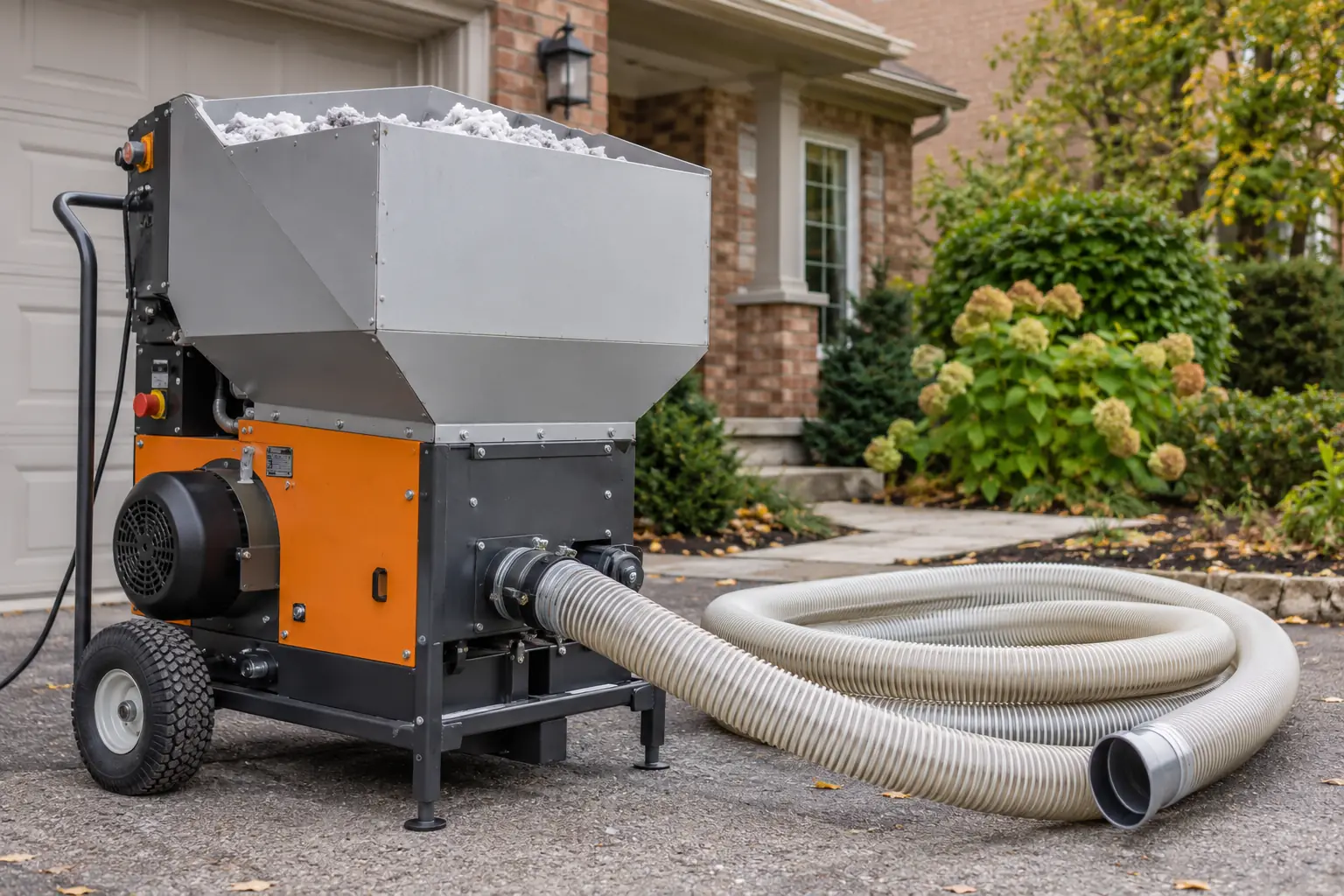
Blown-in describes how loose fill is installed
Blown-in insulation is loose-fill material delivered through a hose using installation equipment. For a suitable open attic, the work is specified by product, area and coverage requirements.
The method can be used after ordinary removal, in an attic with little existing insulation, or as part of a suitable top-up. Those are different project starting points even when similar equipment is used. If the main question is whether an existing layer can remain, begin with the top-up service page.
MATERIAL CHOICE
Compare the specification, not the colour
Loose-fill fibreglass
Ask for the actual product name and its instructions for the intended attic application. Appearance and nominal depth alone do not establish the installed performance.
Cellulose loose fill
Confirm the specified coverage and thickness requirements, including any product instructions concerning settling. Use the manufacturer’s data for that product.
A different assembly
A closed wall cavity, sloped ceiling or enclosed garage floor is not an open attic floor. It needs a separate design, access plan and suitable installation method.
Tell us what is happening in your home
Tell us which rooms feel uncomfortable, what you know about the existing insulation, or which work you are planning. You do not need to know the material or R-value before making an enquiry.
We connect Mississauga homeowners with independent insulation contractors.
Enquiries are currently unavailable
Please check back shortly.
WHAT THE QUOTE SHOULD SAY
Five parts of a useful installation specification
| Item | What to establish |
|---|---|
| Application | The roof spaces and open attic-floor areas included. |
| Existing layer | Whether insulation stays, is corrected locally or is removed. |
| Selected product | The named material and relevant installation information. |
| Finished coverage | The intended level, coverage quantity and thickness requirements for that product. |
| Verification | The completion records, photographs or accessible checks included in the price. |
The materials comparison is useful before choosing a product. The R-value guide explains why two materials with the same visible depth can require different specifications.
BEFORE THE HOSE ARRIVES
Preparation determines what gets covered
A layer of new insulation can make ceiling-level details harder to reach. Confirm which accessible air leaks, hatch details and ventilation paths will be addressed first. The contractor should also identify locations that need special clearances or a different trade, rather than treating every opening as an ordinary gap.
Ask about low-clearance edges and separate attic zones. Blowing material from the access opening does not by itself prove that every section can be prepared or that coverage will be consistent. A Mississauga home with an addition, multiple levels or a partly finished roof may need more than one access arrangement.
A suspected roof leak, unknown material or an unsafe condition can interrupt the sequence. The scope should explain how new findings are reported and how you approve a change before more work is performed. See what an attic assessment can examine.
ACCESS & HOUSEHOLD PLANNING
Ask how the equipment reaches the work area
Confirm the route
Discuss where equipment and hoses will be placed, what access is needed through the house and what the homeowner should clear in advance.
Agree on protection
Ask how the access route and occupied rooms will be protected and which cleanup is included. Noise, parking and access hours can matter for a shared driveway or managed property.
Plan the handover
Arrange to receive the promised specification and completion information. Confirm that the hatch can still be used and ask about preserving coverage during later maintenance.
BUDGET & NEXT STEP
Request a scope that can be compared
The cost depends on more than material volume. Attic size, access, existing conditions, preparation and excluded roof spaces affect the proposal. Use the 12-point quotation checklist to compare equivalent work.
If you expect to use an incentive, verify the rebate route before starting. Contractor participation and required timing must be confirmed independently of the choice between cellulose and fibreglass.
When you enquire, include the Mississauga postal code, property type and whether the attic has been assessed. If a report already exists, describe its findings. An independent contractor confirms whether they can assess the space and quote the work.
YOUR QUESTIONS
Blown-in installation questions
Does the blowing machine decide the R-value?
No. The named product, installation method, coverage and thickness requirements define the specification. The equipment is one part of achieving that installation.
Can loose fill be used around attic framing?
It is commonly considered for suitable open attic floors, but obstructions, clearances, access and the product’s permitted use still need assessment.
Is blown-in insulation an air barrier?
Do not assume an ordinary loose-fill layer replaces the ceiling air barrier. Ask which air-sealing work is included before the insulation is installed.
Can the house area be used to order material?
The relevant insulation area should be established for the actual roof spaces. Living area, garage area and the attic footprint may differ.
General building-envelope reference: ENERGY STAR’s attic insulation guidance. Product instructions and the applicable Canadian requirements govern the actual work.