
THE DIRECT ANSWER
A top-up starts with what can safely remain
A top-up adds insulation to an existing layer that is suitable to retain. It is an upgrade scope, not a reason to remove everything or a promise that every attic only needs more depth.
The useful first decision is whether the existing material can stay while the contractor completes the necessary preparation. If the attic is suitable, the quotation can account for the retained insulation, the added product and the intended finished coverage. Unknown material, unresolved moisture and inaccessible sections need a different conversation.
For an explanation of the retain-or-remove decision itself, read adding new attic insulation over old insulation. This page focuses on arranging and comparing the top-up work.
SUITABILITY
Three possible starting points
Ready to plan an addition
The existing material is identified, suitable to retain and accessible enough for the proposed preparation. Ask how the retained layer contributes to the finished specification.
Preparation comes first
Displaced coverage, a poorly treated hatch or accessible ceiling leaks may need attention before another layer is installed. The quote should describe these corrections separately.
The project needs another first step
Active water entry, suspect material or a condition outside ordinary insulation work should be assessed before the area is disturbed or covered. A top-up is not a substitute for that investigation.
Tell us what is happening in your home
Tell us which rooms feel uncomfortable, what you know about the existing insulation, or which work you are planning. You do not need to know the material or R-value before making an enquiry.
We connect Mississauga homeowners with independent insulation contractors.
Enquiries are currently unavailable
Please check back shortly.
MEASURE THE RIGHT AREA
A single depth reading is not the scope
An installer needs to establish the area included in the upgrade and the distribution of the existing insulation. The area near the access opening may differ from the eaves, a roof intersection or the space above an addition. A photograph near the hatch does not establish uniform coverage.
Ask how separate roof spaces are treated. A Mississauga split-level house or a home with a rear addition may have more than one access point. In a townhome or condominium property, confirm who can authorize the work and whether a shared assembly needs management approval. Keep inaccessible areas explicit rather than assuming they are included.
The R-value and depth guide explains why the product specification matters. The quote should distinguish an added amount from the intended finished level; those figures are not interchangeable.
BEFORE THE NEW LAYER
Agree on the preparation in writing
| Detail | Question for the quotation |
|---|---|
| Ceiling air barrier | Which accessible leaks will be sealed before they become covered? |
| Eaves and roof airflow | How will the intended ventilation route remain clear at the specified insulation level? |
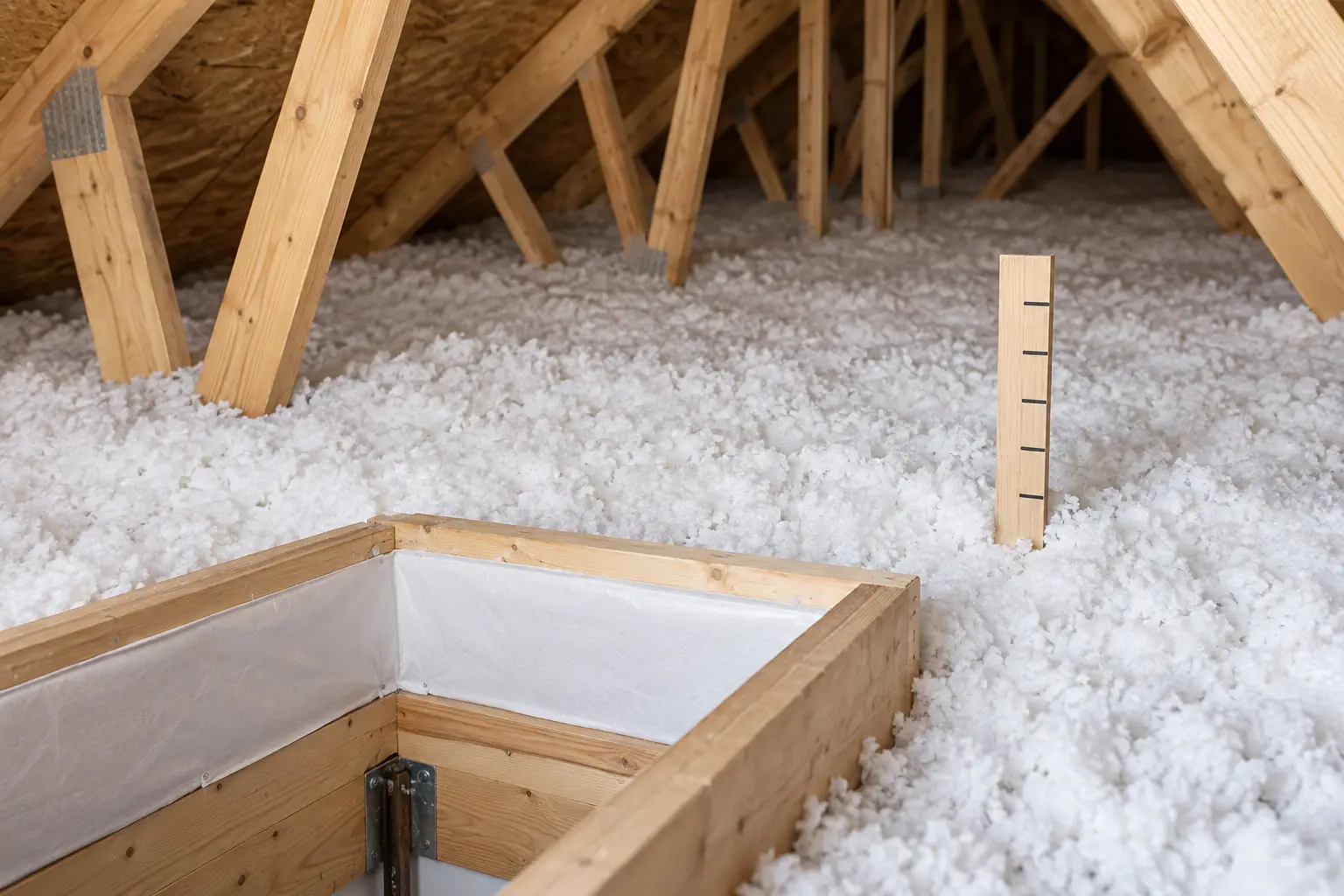
| Hatch and surrounding curb | Are insulation, seals and loose-fill containment included as separate details? |
| Disturbed areas | Will existing material be corrected, locally moved or removed, and why? |
| Access and cleanup | What must be cleared inside the house, and who protects and cleans that route? |
Use the dedicated air-sealing scope and ventilation planning pages for those related questions. If removal is proposed, ask whether it is local preparation or a separate removal and replacement project.
THE INSTALLATION
Confirm the product and the completion record
A top-up often uses loose-fill material installed by a blowing machine. The contractor should identify the product and the manufacturer’s coverage requirements for the planned application. The amount required depends on the existing layer, the measured area and the finished specification; a generic bag count or fixed depth should not replace that information.
Material compatibility is part of the assessment. A change from one insulation material to another is not automatically prohibited or automatically suitable. Ask the contractor to explain the proposed combination for the actual attic. The blown-in insulation page describes the installation method in more detail.
Before accepting the quote, agree on what you will receive at completion: the product used, the area treated, any agreed coverage records and a note of limitations or changes. Ask how later electrical or HVAC access can be managed without disturbing the layer.
COST & PROGRAMS
Compare the complete top-up price
A price for added material alone cannot be compared directly with a quote that includes air sealing, hatch work and extensive eave preparation. Use the cost and scope guide and ask for a written explanation of differences between proposals.
Any rebate eligibility needs its own confirmation before work starts. The rebate guide links to the official requirements; this enquiry website does not approve applications. Confirm whether the contractor participates in the route you intend to use and who handles the required records.
YOUR QUESTIONS
Top-up questions
Can a top-up be quoted without removing the old layer?
A visit can often assess accessible existing conditions, but the contractor should identify what cannot be verified. Ask whether moving material locally is part of the assessment or a later agreed preparation step.
Is topping up always less expensive than replacement?
Keeping suitable material can avoid a removal scope, but access and preparation still matter. Compare actual written inclusions rather than assuming one fixed price relationship.
Will the extra insulation hide a hatch problem?
It should not. The movable panel, perimeter seal and surrounding containment need their own treatment. Ask for the hatch scope before installation.
Do I need to measure the attic myself?
No. Start with the property type, the concern and any existing records. Do not enter the roof space or disturb material just to prepare an enquiry.
General building-envelope reference: ENERGY STAR’s attic insulation guidance. Product instructions and the applicable Canadian requirements govern the actual work.