
On this page
- A top-up is about retaining suitable insulation
- What should be checked before adding insulation?
- Do not top up over an unresolved moisture issue or suspect material
- Added insulation, finished level, and R-value are different figures
- When removal or another first step makes more sense
- How blown-in insulation fits a suitable top-up
- Compare top-up quotes by scope, not the total alone
- Seven details to confirm in an attic top-up quote
- What to share when requesting an attic assessment
Knowing when to add attic insulation in Mississauga starts with the condition of the attic, not the age of the insulation alone. A top-up can be a sensible scope when the existing material is suitable to retain, coverage can be corrected where needed, and important preparation can be completed before the new layer goes in. If there is an unresolved leak, suspect material, or a condition that needs another trade, adding more insulation should wait.
At Mississauga Insulation, we provide attic insulation top-ups and assessments to help homeowners establish whether an added layer, preparation work, or a different project scope is appropriate. You do not need to know the insulation type or R-value before starting the conversation.
A top-up is about retaining suitable insulation
An attic insulation top-up adds new insulation over an existing layer that can remain in place. It is not automatically the right response to every attic that looks thin, uneven, or old. The useful question is whether the retained insulation, the ceiling below it, and the roof-space details can support the intended upgrade.
Suitable existing insulation may be retained when it is identifiable enough to plan around, reasonably dry, and accessible enough for the agreed preparation. A top-up may also involve correcting displaced coverage in specific areas. However, a layer that looks acceptable near the attic hatch does not prove the entire attic has uniform coverage. Low-clearance edges, separate roof spaces, additions, and areas above garages can all require their own review.
We outline the retain-or-remove decision in our guide to attic insulation top-ups in Mississauga. The key is to receive a written scope that explains what stays, what is moved or corrected locally, and what finished coverage is intended.
What should be checked before adding insulation?
More depth does not correct every attic problem. Before insulation is placed, the accessible attic should be reviewed for conditions that affect the work sequence, including uneven existing coverage, moisture clues, ceiling-level openings, hatch details, and the path intended for roof ventilation.
Existing material and coverage
Age alone does not establish that insulation needs removal. The material type, condition, and distribution matter more. Insulation may have been compressed, moved during earlier electrical or HVAC work, or left thin around edges and obstructions. A good assessment distinguishes between isolated areas that need correction and broader conditions that change the project.
Moisture, pests, and uncertain material
Water entry, visible moisture effects, known pest activity, and unidentified material need attention before ordinary insulation work proceeds. Re-insulating does not resolve a roof leak or pest source, and covering a problem can make later investigation harder.
Pause before covering
Do not top up over an unresolved moisture issue or suspect material
Active water entry, known pest activity, or material of uncertain identity needs assessment before it is disturbed or covered. In particular, suspect vermiculite should be left undisturbed pending appropriate professional advice.
Air sealing and attic-hatch details
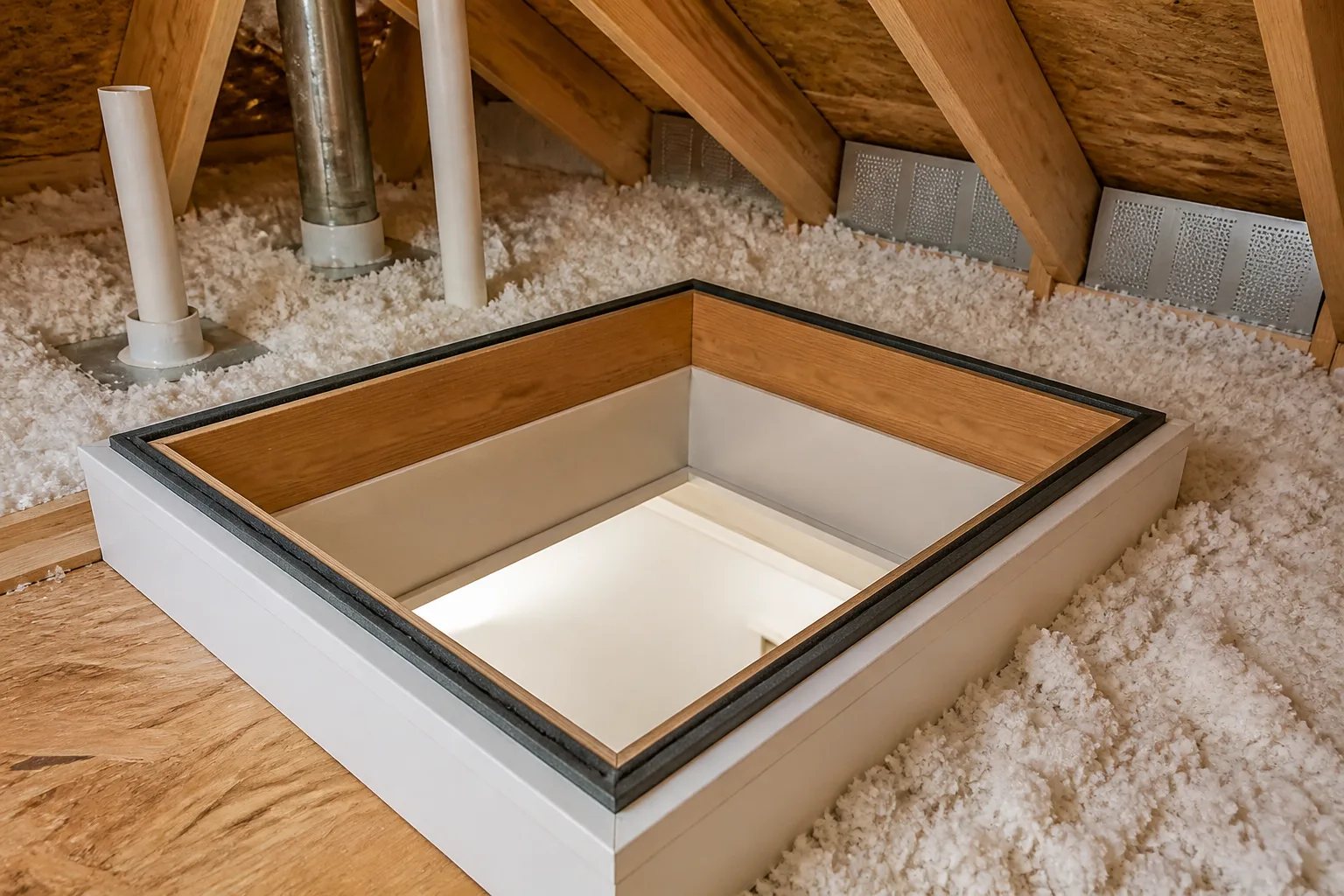
Insulation slows heat flow; it does not serve as a complete air barrier. Accessible openings between the living space and an unconditioned attic can require separate air-sealing preparation. The attic hatch also needs its own consideration: the movable panel, perimeter seal, fixed frame, insulation, and loose-fill containment are related but distinct details.
Because new insulation can make ceiling-level details harder to reach, the scope should identify accessible preparation before the final layer is installed. Our attic air sealing information explains the distinction between controlling leakage from the home and preserving the intended airflow route through a vented roof space.
Ventilation paths and clearances
In a conventional vented attic, airflow at the roof space has a different function from air leakage through the ceiling. Adding insulation should not obstruct intended eave intake or other required ventilation paths. Baffles, containment, clearances around particular components, and low roof edges all need to be addressed according to the actual attic and product requirements.
Added insulation, finished level, and R-value are different figures
A proposal may refer to the amount being added and the intended finished level. Those are not interchangeable. For example, retained insulation can contribute to a finished target only if its condition and coverage have been assessed. A contractor should explain the starting assumption rather than treating the existing layer as a known, uniform value.
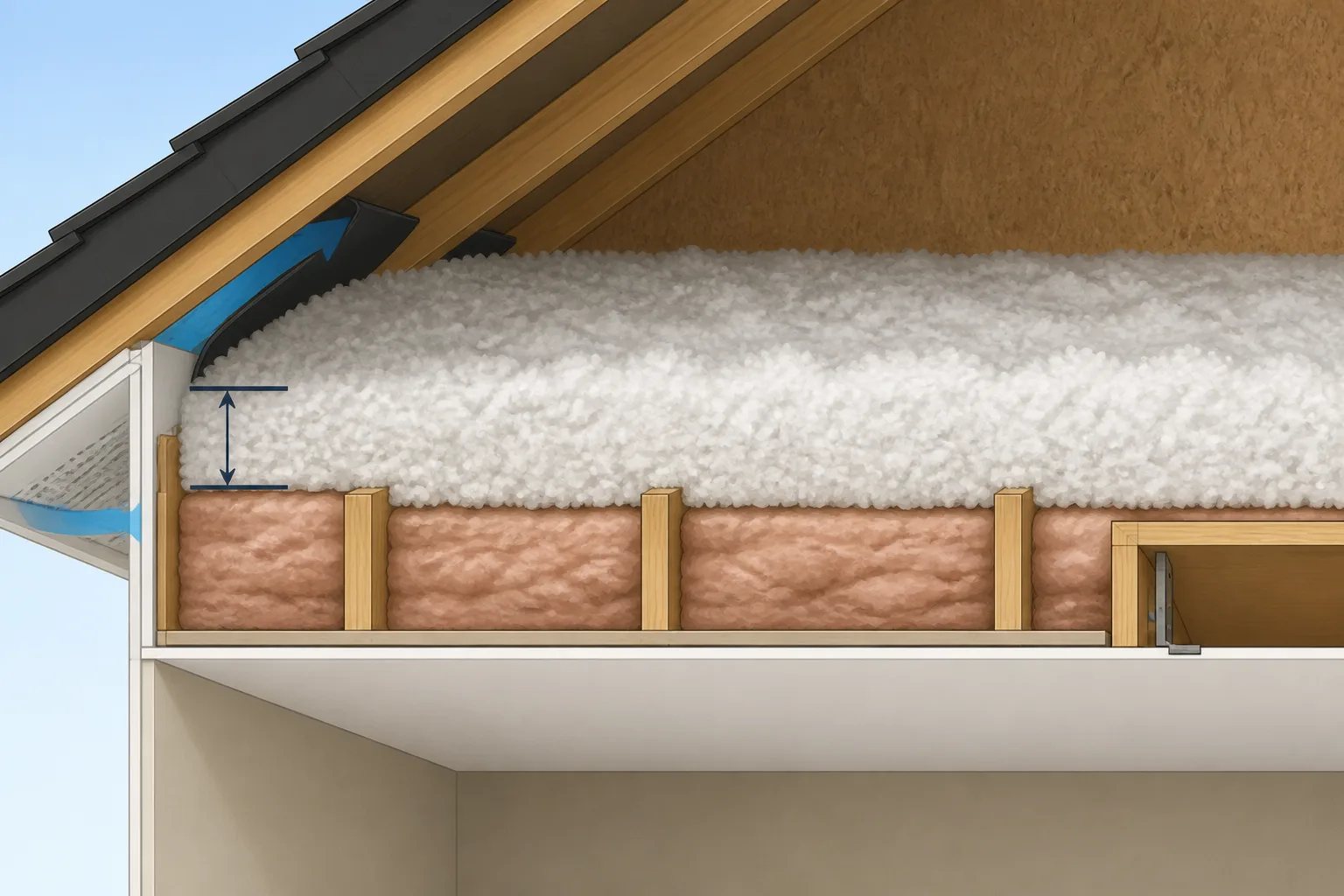
R-value describes resistance to heat flow, while depth is a physical measurement. There is no universal inches-to-R-value conversion because materials and products have different thermal properties and installation requirements. With loose-fill insulation, the specified product, attic area, material quantity, and manufacturer coverage requirements work together. A depth reading at one location is useful context, but it does not establish the installed specification for the whole attic.
Ask whether the quoted figure is:
- the thermal resistance expected from the new material alone;
- an intended finished total that includes retained insulation;
- a product-specific installed or settled thickness requirement; or
- a program threshold that has separate eligibility conditions.
Our guide to attic insulation R-value and depth explains why the product name and coverage documentation are more useful than a generic promise to add a fixed number of inches.
When removal or another first step makes more sense
A top-up should not be used to cover over an unresolved condition. Removal and replacement may need a separate discussion when material has been affected by water, pests, contamination, uncertain identity, or when the required preparation cannot reasonably be completed with the existing layer in place. Local movement of suitable insulation for access is different from removing an entire attic’s insulation, so the affected area and reason should be clear.
Suspect vermiculite is a distinct stop point. Some vermiculite insulation may contain asbestos, and appearance cannot confirm whether material is safe. Do not enter the attic, disturb material, or collect a sample simply to prepare an insulation enquiry. Appropriate professional assessment is needed before routine insulation work is planned.
For projects where retention is not appropriate, see our information on insulation removal and replacement. The scope should identify why removal is proposed, what is included in disposal and preparation, and what happens before replacement insulation is installed.
How blown-in insulation fits a suitable top-up
Loose-fill insulation is commonly installed in suitable open attic floors by delivering material through a hose with installation equipment. The equipment itself does not define the quality of the work. The relevant specification identifies the actual product, the attic area included, the existing condition, the required coverage, and the finished installation level.
Loose-fill fibreglass and cellulose are two material forms that may be discussed for attic work, but a material change is not automatically suitable or unsuitable. The existing insulation, the proposed product, moisture considerations, and the applicable product instructions must be considered together. A facing or added vapour-control layer should not be introduced casually between insulation layers.
Our blown-in insulation guide covers the installation method and the questions that help make a loose-fill proposal clear.
Compare top-up quotes by scope, not the total alone
Two top-up quotes can differ because they describe different work. One may include accessible air sealing, hatch treatment, eave preparation, and completion records. Another may cover only added material. Neither total can be evaluated fairly until the included areas, preparation, material, and exclusions are set beside each other.
Quote checklist
Seven details to confirm in an attic top-up quote
Use these points to compare proposals describing the same attic work.
- Which roof spaces and attic-floor areas are included or excluded?
- What existing insulation will remain, be corrected locally, or be removed?
- What product is proposed, and what installation information applies to it?
- Is the stated level an added amount or the intended finished result?
- Which accessible air-sealing, hatch, and ventilation details are included before installation?
- What access protection, cleanup, and change-approval process are included?
- Which product, coverage, and completion records will be provided?
Also confirm how changes will be handled if an unexpected condition is found. A written pause-and-review process is clearer than assuming a quote covers every concealed detail. If an incentive is relevant, confirm the current program route, timing, eligibility, contractor participation, and documentation before authorizing work. A contractor quote does not by itself establish rebate eligibility.
What to share when requesting an attic assessment
A useful starting description includes the property type, the rooms or areas causing concern, any known attic access point, and any known roof leak, pest issue, renovation, or prior insulation work. Homes with additions, split levels, attached garages, or multiple roof spaces may have more than one attic zone, so mention any layout details you know.
You do not need to enter the attic or move insulation beforehand. If you already have an inspection report or safe existing photographs, those details can help frame the discussion. An assessment can identify accessible conditions, explain what cannot be verified, and clarify whether a top-up is the appropriate next step.
The best top-up decision is a condition-based one: retain suitable material where practical, complete the preparation that can be defined, and document the finished insulation scope rather than relying on a single depth or price figure.
Helpful answers
Frequently Asked Questions
Clarify the right attic insulation scope
Tell us what you know about your attic and the comfort concern so we can discuss whether a top-up assessment is appropriate.