
On this page
- A stain or damp attic does not identify the source
- Two different moisture paths
- Record timing and location as clues
- Indoor air leakage and exhaust arrangements
- Why “add more ventilation” is not a complete diagnosis
- What happens to affected insulation?
- Which professional should be involved first?
- Agree on the sequence before insulation work starts
- Frequently asked questions
A stain or damp attic does not identify the source
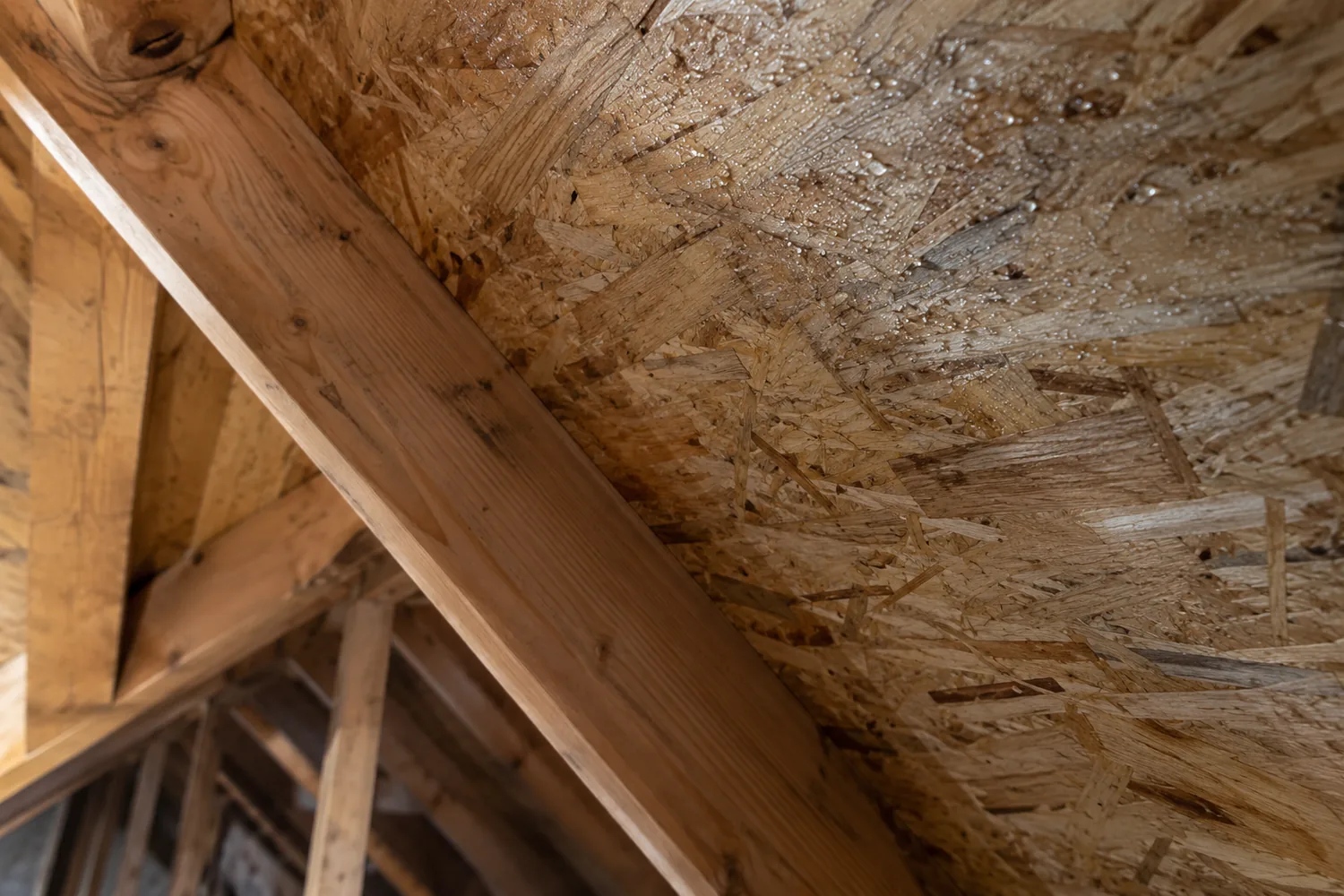
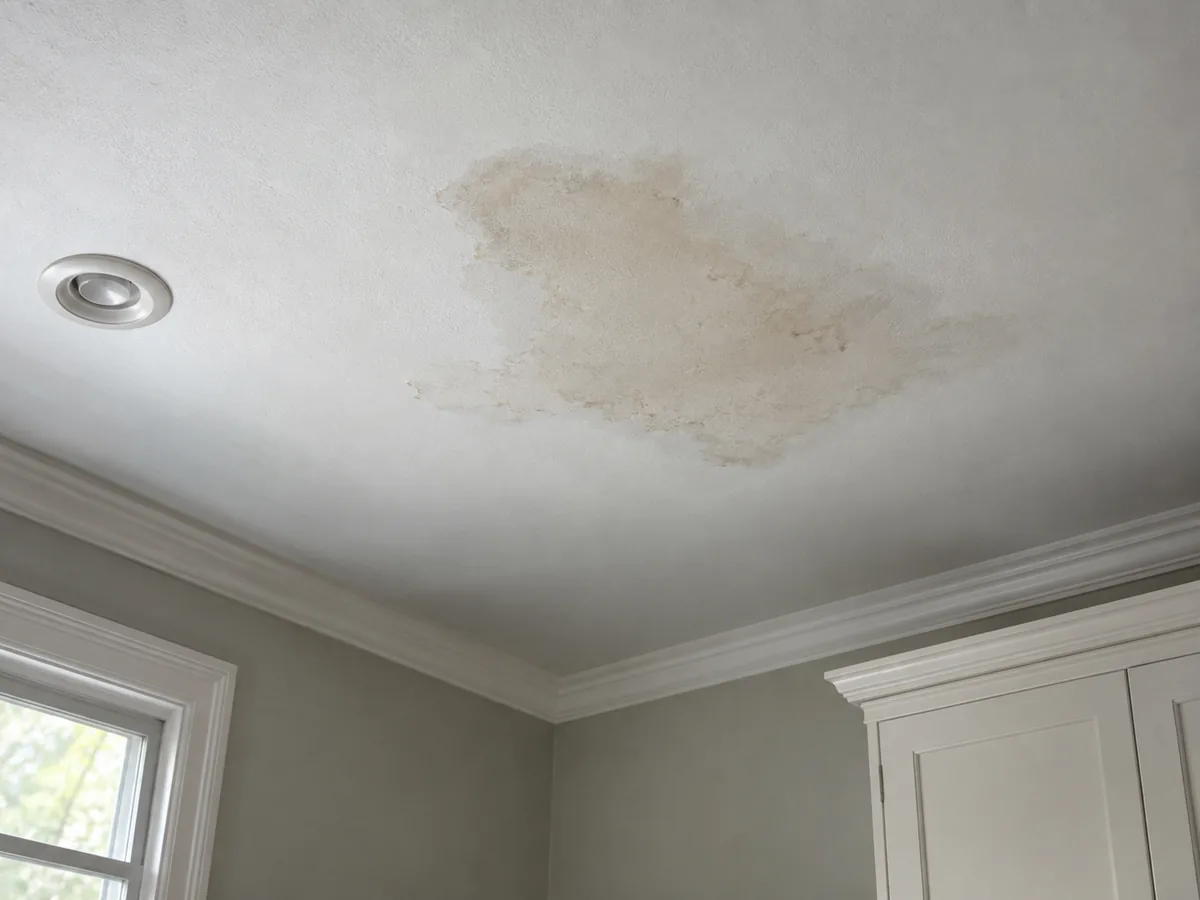
Attic condensation and a roof leak can both produce moisture on building materials or a stain below. They can also occur together. Timing, location and weather patterns provide clues, but a photograph or a single observation cannot establish the cause. Investigate the source before covering affected areas with new insulation.
For an insulation enquiry, describe what you noticed, when it appeared and whether a roofing or moisture assessment has already been completed. An ordinary top-up quote should not silently absorb an unresolved water problem. A provider may need to refer part of the investigation to a roofer, HVAC specialist or another appropriate professional.
Two different moisture paths
Roof leakage involves water entering through the exterior roof or associated details. The entry point may not sit directly above a visible stain because water can travel along materials before it becomes apparent indoors.
Condensation occurs when moisture in air meets a sufficiently cool surface. In an attic, the investigation can include indoor moisture, air-leakage paths, exhaust arrangements and the roof assembly’s ventilation and drying conditions. This is a whole-system question rather than proof that one extra roof vent is needed.
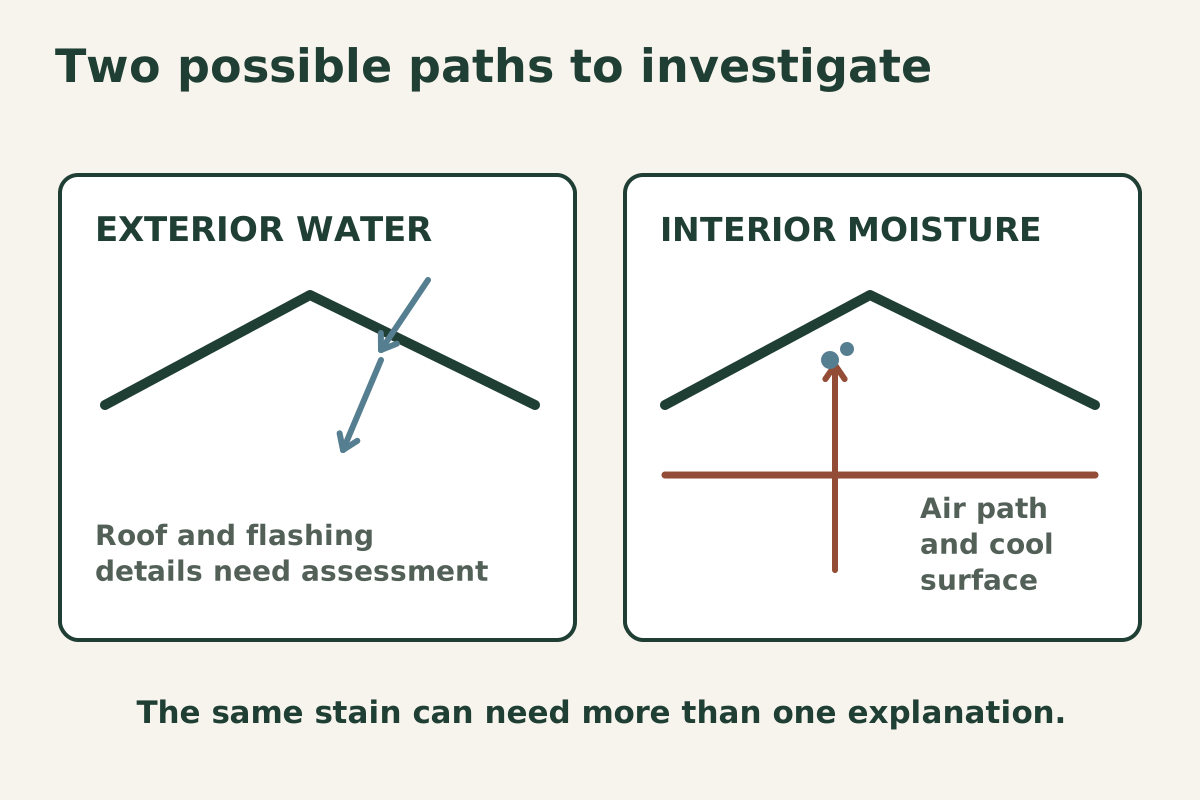
The diagram shows different possible paths, not a diagnosis. A qualified assessment must relate the evidence to the actual roof and interior conditions.
Record timing and location as clues
| Observation | What it can help a professional investigate | What it does not prove |
|---|---|---|
| A stain changes after rain | Roofing, flashing and other possible water-entry details. | That the visible stain is directly below the entry point. |
| Moisture appears during cold weather or a thaw | Condensation, frost melt, roof conditions and indoor moisture paths. | That ventilation alone will solve the problem. |
| A concern follows bathroom use | Exhaust operation and routing, plus related air leakage. | That the duct is the only source. |
| A mark remains unchanged for a long time | Whether it is an old stain and whether materials are now dry. | That no active issue exists elsewhere. |
| More than one area is affected | A broader roof-space or moisture investigation. | That every area has the same cause. |
Share observations from normal living areas and records you already have. Do not climb onto the roof or walk into an unsafe attic to gather evidence for an enquiry.
Indoor air leakage and exhaust arrangements
An attic assessment may consider how air from the living space could reach the roof space. The hatch, ceiling penetrations and altered construction are examples of details that can need attention. The aim is to understand the path, not simply add insulation over it.
Bathroom or kitchen exhaust arrangements also deserve a clear scope. Ask whether the assessor can verify routing and exterior termination or whether another trade needs to inspect concealed sections. Do not assume that seeing a duct inside the attic confirms that it terminates correctly outside.
ENERGY STAR identifies moisture concerns, exhaust into an attic and ventilation issues as reasons to involve a professional before proceeding with attic air-sealing work. Its general guidance is useful context; the method and requirements must suit the actual Canadian project.
Why “add more ventilation” is not a complete diagnosis
Ventilation in a conventional vented attic relies on the intended intake and exhaust arrangement and an unobstructed path. An assessment should identify the existing design and relevant restrictions. Adding an exhaust device without understanding air leakage, intake or the roof assembly can leave the underlying question unanswered.
Ask what evidence supports any proposed ventilation work and how the rest of the attic will be addressed. The air sealing and ventilation service guide separates the functions of the insulation layer, ceiling air barrier, eave baffles and roof-space airflow.
Indoor humidity, mechanical ventilation and heating-system considerations may also belong in a broader assessment. Avoid accepting a single universal humidity or vent rule from a photograph. The right professional should explain what was checked and what remains uncertain.
What happens to affected insulation?
The decision depends on material condition and the source of the problem. New insulation should not conceal unresolved wet areas or substitute for a repair. Ask who determines whether affected material can remain, whether removal is localized or wider, and what conditions must be met before re-insulating.
If removal is proposed, the scope should separate ordinary material removal from any specialist assessment or remediation. A dark mark is not enough to identify mould species, determine a health risk or establish a particular treatment. Suspect hazardous material also requires its own appropriate assessment before disturbance.
The removal and replacement guide explains how to define that work. Keep the roof or moisture repair, material decision, preparation and new installation as distinct steps in the proposal so their responsibilities are clear.
Which professional should be involved first?
If water is actively entering or the concern strongly follows roof weather exposure, a roofing assessment may be the most immediate starting point. If the question involves exhaust routing or mechanical ventilation, an HVAC or ventilation provider may be needed. A contractor assessing insulation can describe visible conditions within the agreed scope and identify when another professional is required.
For an unclear attic condition without an urgent active issue, ask what an attic inspection includes and whether it provides written findings. Confirm the fee, access limits and whether any specialist tests are included. A standard quotation visit does not automatically provide a comprehensive moisture investigation.
If water is affecting electrical equipment or a ceiling appears unsafe, keep clear and seek the appropriate urgent professional assistance. An online insulation enquiry is not an emergency response route.
Agree on the sequence before insulation work starts
A useful written sequence identifies the source investigation, the necessary repair, the decision about affected materials, any preparation work and the conditions for proceeding with insulation. It should also identify who is responsible for confirming each step, rather than assume one contractor is handling everything.
For a Mississauga home with several roof spaces, ask whether the concern and proposed work cover all relevant areas. An addition or split-level roof may have a separate access point. If a condominium or management body controls the roof, include its authorization and repair process in the plan.
Keep existing reports and the dates of repairs with the project record. If the symptom returns, those details are more useful than assuming that the most recent insulation work must explain every mark. For a comfort concern without moisture, the upstairs comfort article provides a different starting point.
Frequently asked questions
No. It may reflect a previous event, an active leak or another moisture path. Its location and timing help an investigation, but the cause needs assessment.Does a ceiling stain prove there is an active roof leak?
Yes. Finding evidence of one does not automatically exclude the other. Ask whether the assessment considered both the exterior roof and interior moisture paths where relevant.Can condensation and a roof leak happen together?
No ordinary top-up should be used to conceal an unresolved wet area. Investigate the source and assess the affected material before deciding what stays and when new insulation can be installed.Should wet insulation be covered with a new layer?
No. Roof defects, exhaust arrangements and air leakage can require separate work. An attic upgrade should follow the condition assessment and agreed preparation.Can more attic insulation prevent every moisture problem?