
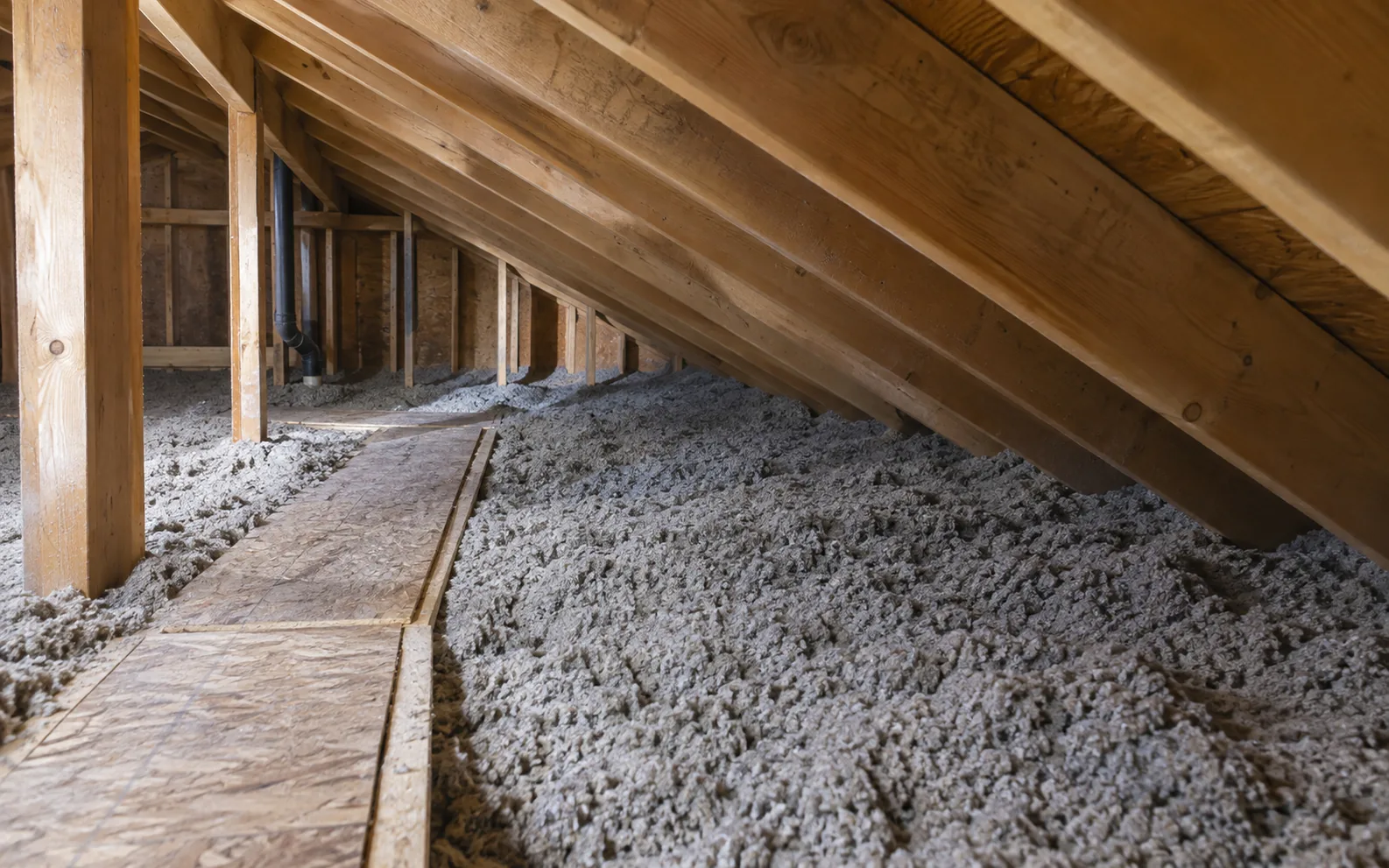
THE STARTING POINT
An attic upgrade starts with the condition of the space
Adding insulation can improve the resistance to heat flow between your home and an unconditioned attic. The useful question is not simply how much material can be added. It is whether the existing coverage, air leakage, ventilation paths and access allow the proposed upgrade to work as intended.
A straightforward project may involve keeping suitable existing insulation, completing agreed preparation and installing additional loose fill. Other attics need a different sequence because insulation has been displaced, there is evidence of moisture, or parts of the space cannot be reached safely. An attic inspection and assessment helps establish that scope before you compare quotations.
For Mississauga homeowners, the enquiry can begin with what you have noticed: an upstairs room that is uncomfortable, a recent renovation, insulation disturbed by another trade, or uncertainty about what is already overhead. You do not need to enter the attic or identify the material to request help.
LOOK A LITTLE CLOSER
Attic insulation top-ups
A top-up retains suitable existing insulation and adds to it after the attic is assessed and prepared. It can be part of an upgrade when the retained material and access support the proposed finished coverage.
Our dedicated attic insulation top-up page explains suitability, preparation, quote inclusions and completion records. If you are still deciding whether material can remain, read the guide to adding new insulation over old.
Tell us what is happening in your home
Tell us which rooms feel uncomfortable, what you know about the existing insulation, or which work you are planning. You do not need to know the material or R-value before making an enquiry.
We connect Mississauga homeowners with independent insulation contractors.
Enquiries are currently unavailable
Please check back shortly.
PLAN THE DETAILS
What the assessment should establish
An assessment should connect the visible condition of the attic to a clear proposed scope. Useful questions include:
- What type of insulation is present, and is that identification reliable?
- How consistent is its distribution across accessible areas?
- Are there visible moisture concerns, damage or other conditions to investigate first?
- Which ceiling-level air leaks can be addressed before installation?
- How will ventilation openings and eave airflow paths remain clear?
- What access, height or roof-layout limitations affect the work?
- How will the hatch and its surrounding insulation be treated?
Confirm what the visit includes. A contractor’s assessment for a quotation is not automatically a formal energy assessment, a whole-home inspection or a written building-condition report. If you need one of those services, make that request when booking.
Explore the dedicated blown-in insulation service page for equipment access and specification questions.
COMPARE YOUR OPTIONS
Blown-in fibreglass and cellulose
Loose-fill insulation can be installed across an accessible attic floor and around ordinary framing. Fibreglass and cellulose are common material options, but they should be compared using the actual product and installation requirements rather than appearance alone.
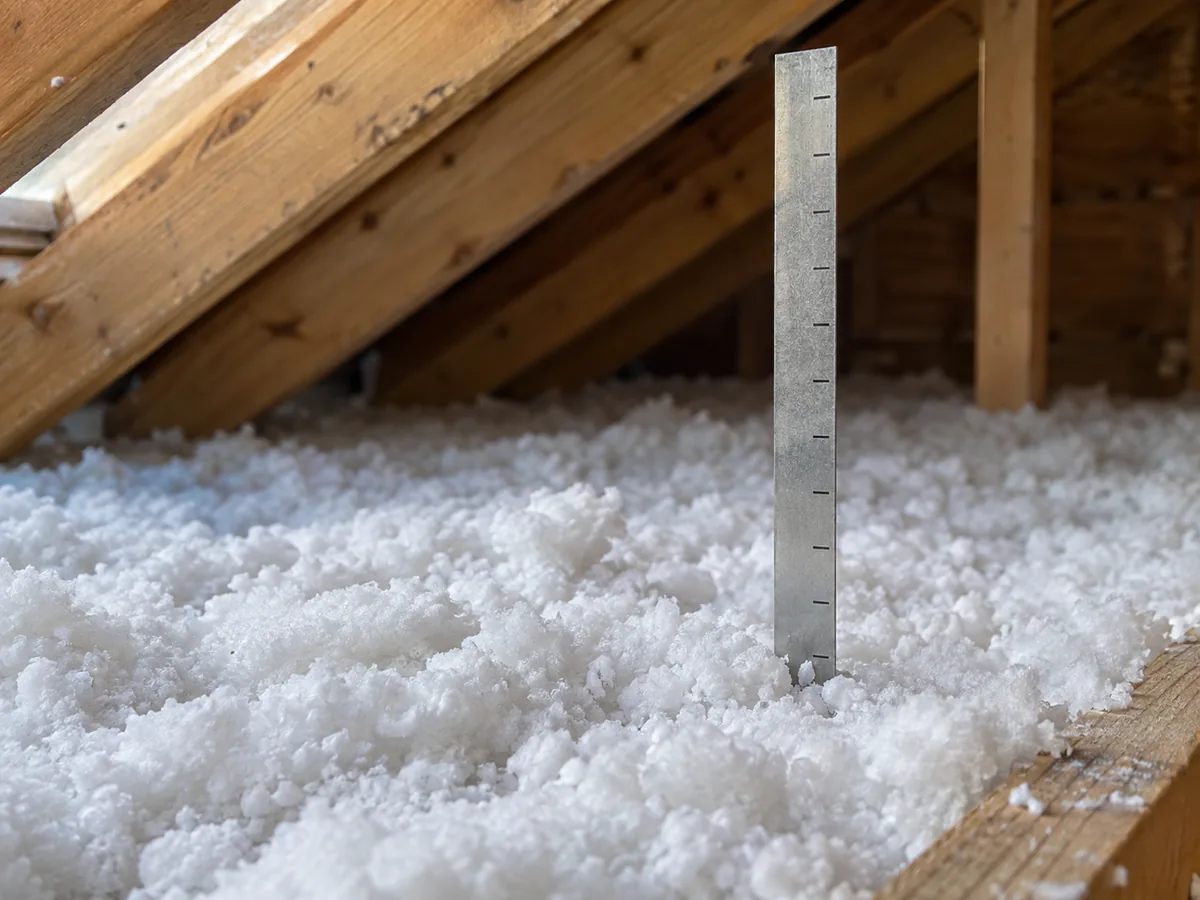
The specification should identify the product, coverage area and intended installed performance. Required depth and quantity are product-dependent. Do not assume that the same number of inches means the same R-value across materials. Our R-value and insulation-depth guide explains how to read that part of a quotation.
Material choice also needs to fit the assembly. An open attic floor, a sloped roof cavity and a finished wall do not present the same access or design conditions. The insulation materials guide compares product forms and the questions to ask about their use.
PART OF THE SCOPE
Preparation is part of the installation scope
| Detail | Why it belongs in the quotation |
|---|---|
| Attic-floor air sealing | Clarifies which accessible leakage points will be addressed before they are covered |
| Ventilation paths and baffles | Explains how the proposed insulation will be kept from obstructing the intended airflow route |
| Hatch insulation and seals | Addresses a separate part of the ceiling boundary rather than treating the opening as finished automatically |
| Hatch dam or containment | Helps keep loose fill from spilling into the access opening |
| Access and protection | Sets expectations for the route through the house and the handling of the work area |
| Final documentation | Identifies what the homeowner will receive about material, coverage and completed scope |
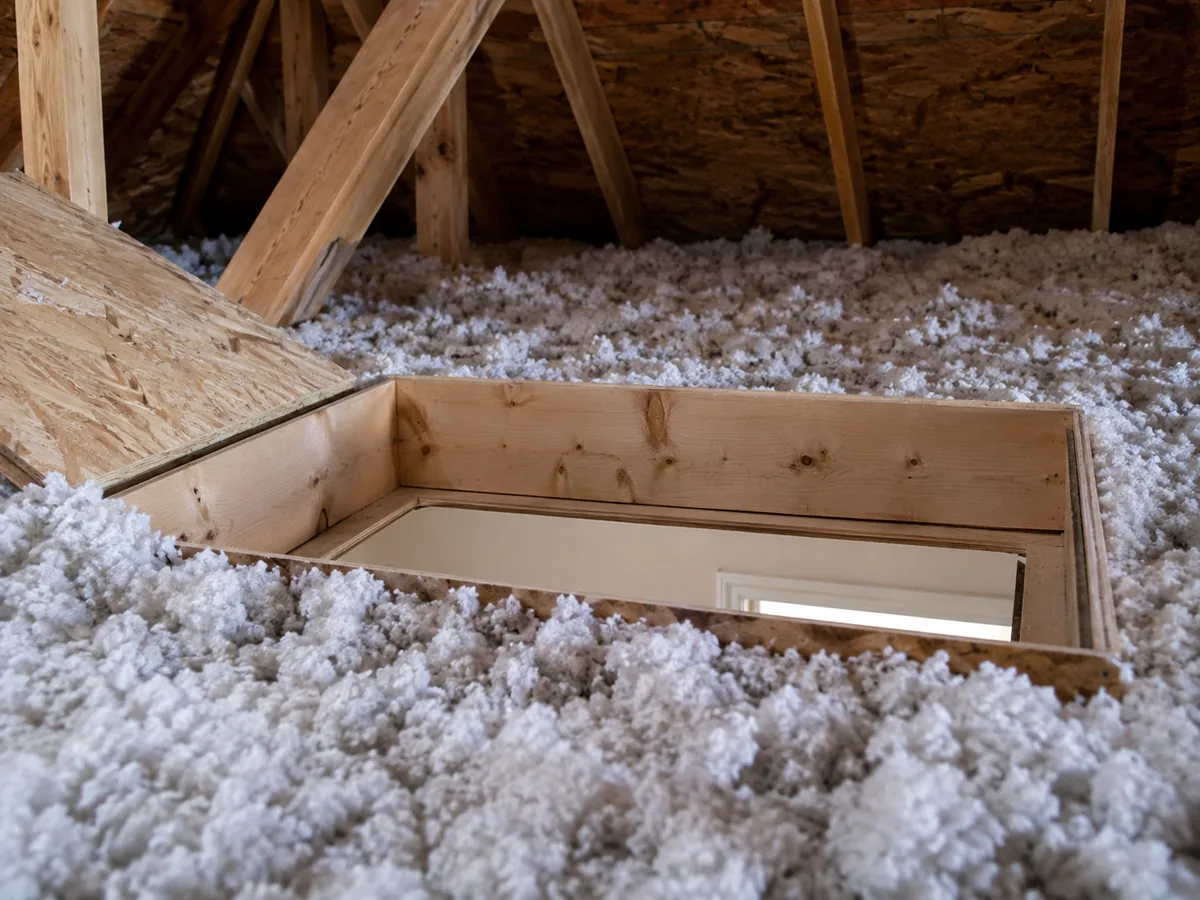
Not every project needs the same preparation. Ask the contractor to distinguish included work from optional recommendations and excluded work. If a roof leak, an exhaust problem or suspect material changes the project, agree on the next step before installation proceeds.
PUT IT IN WRITING
Top up, correct first, or remove and replace?
| Starting point | The next decision |
|---|---|
| Existing material appears suitable and the attic can be prepared | Assess whether a top-up can achieve the proposed coverage and performance |
| Coverage is uneven or disturbed | Establish the affected area and whether redistribution, localized correction or additional material is appropriate |
| Moisture or another underlying issue is present | Investigate and address the cause before covering the area |
| Removal is proposed | Ask why it is necessary, what material is involved and whether a specialist is required |
Removal is a separate scope with its own preparation, access and disposal considerations. See insulation removal and replacement for the questions that distinguish it from an ordinary top-up.
FOR YOUR HOME
How an attic insulation project is organized
First, the homeowner describes the project and access arrangements. The contractor then assesses the accessible attic, confirms what is included and provides a quotation. Once the scope is agreed, any required corrective work comes before the insulation installation.
During the upgrade, the agreed material is installed to its specified coverage requirements. Completion should include the promised cleanup and documentation, along with an explanation of any excluded areas or findings that affected the work. Ask how future access can be maintained without disturbing the new coverage.
THE NEXT DECISION
Mississauga homes can have more than one attic condition
A bungalow may have a broad attic footprint. A split-level house, addition or partly finished roof space can introduce separate attic zones, low-clearance areas or knee walls. In a townhome, access and responsibility for parts of the roof assembly may also need clarification.
Give the contractor information about additions, roof changes and previous electrical or HVAC work. These details are more useful than assuming the existing insulation from the home’s age or neighbourhood. The Mississauga home guide explains what to mention before the visit.
THE STARTING POINT
Understand costs and rebates before booking work
Attic area, access, existing material, preparation, removal and the specified installation all affect a quote. Ask for a written scope that makes comparisons possible. A low total may cover a different project from a higher total. Start with the attic insulation cost guide and 12 things to compare in a quote.
If rebates matter to the project, confirm the current route before work starts. Some routes require steps that cannot be completed retrospectively. Our rebate guide links to official program information and separates an attic upgrade from the wider eligibility decision.
YOUR QUESTIONS
Questions about attic insulation
Can new insulation go over the old material?
Sometimes. The existing material must be suitable, and moisture, damage, access and preparation need consideration. An assessment should explain why keeping or removing it is appropriate.
Is blown-in insulation the same as a top-up?
Blown-in describes an installation method. A top-up describes adding insulation to existing coverage. A top-up may use blown-in material, while other blown-in projects start after removal or with an uninsulated attic floor.
Does the quoted area equal my home’s floor area?
Not necessarily. Multiple storeys, additions, garages and different roof spaces can make the relevant attic area different from the living-area figure. Ask how the insulation area was established.
Will insulation fix every hot or cold room?
No single upgrade can be promised to resolve every comfort concern. Air leakage, windows, sun exposure and heating or cooling distribution may also matter. Describe the pattern so the assessment can consider the likely contributors.
Do I need to clear or enter the attic first?
Ask what access preparation is needed in the occupied part of the home. Do not enter the attic, move insulation or disturb suspect material just to prepare for an enquiry.
Building-envelope background: ENERGY STAR attic air-sealing guidance. This explains general principles and is not an Ontario code specification.