
THE STARTING POINT
Compare the scope before comparing the total
There is no dependable single price for every Mississauga attic-insulation project. The attic area, access, existing material, preparation and proposed installation affect the work. A useful quotation explains those items so you can compare like with like.
This guide does not publish a price calculator because a calculator would need a verified pricing model and reliable information about the attic. Instead, it helps you identify what should be measured, what may be included and which assumptions need confirmation before accepting a quote.
If you are ready to enquire, provide the postal code, property type and a short description of the project. A contractor can explain whether an attic assessment is needed before a firm scope is prepared.
LOOK A LITTLE CLOSER
The main factors behind an attic-insulation quote
| Factor | Why it changes the work | What to ask |
|---|---|---|
| Relevant attic area | Determines the area receiving the specified material | How was the area measured or estimated? |
| Existing insulation | Changes the retain, correct, top-up or removal decision | What can stay, and why? |
| Access and roof layout | Affects movement, preparation and reach | Are there separate zones or excluded areas? |
| Material and installed level | Establishes the product and installation quantity | Which product and intended installed performance are specified? |
| Air sealing | Adds preparation at accessible ceiling-level details | Which locations are included? |
| Ventilation and hatch work | May require baffles, clearance or access improvements | Are these included or optional? |
| Removal and disposal | Creates a distinct scope before re-insulation | What material, area and disposal arrangements are covered? |
| Related repairs | May require another trade or separate quotation | Who handles the cause of damage before insulation work? |
Two contractors can produce different totals because they are proposing different work. Ask each to make the boundaries explicit before deciding that one is expensive or another is a bargain.
Tell us what is happening in your home
Tell us which rooms feel uncomfortable, what you know about the existing insulation, or which work you are planning. You do not need to know the material or R-value before making an enquiry.
We connect Mississauga homeowners with independent insulation contractors.
Enquiries are currently unavailable
Please check back shortly.
PLAN THE DETAILS
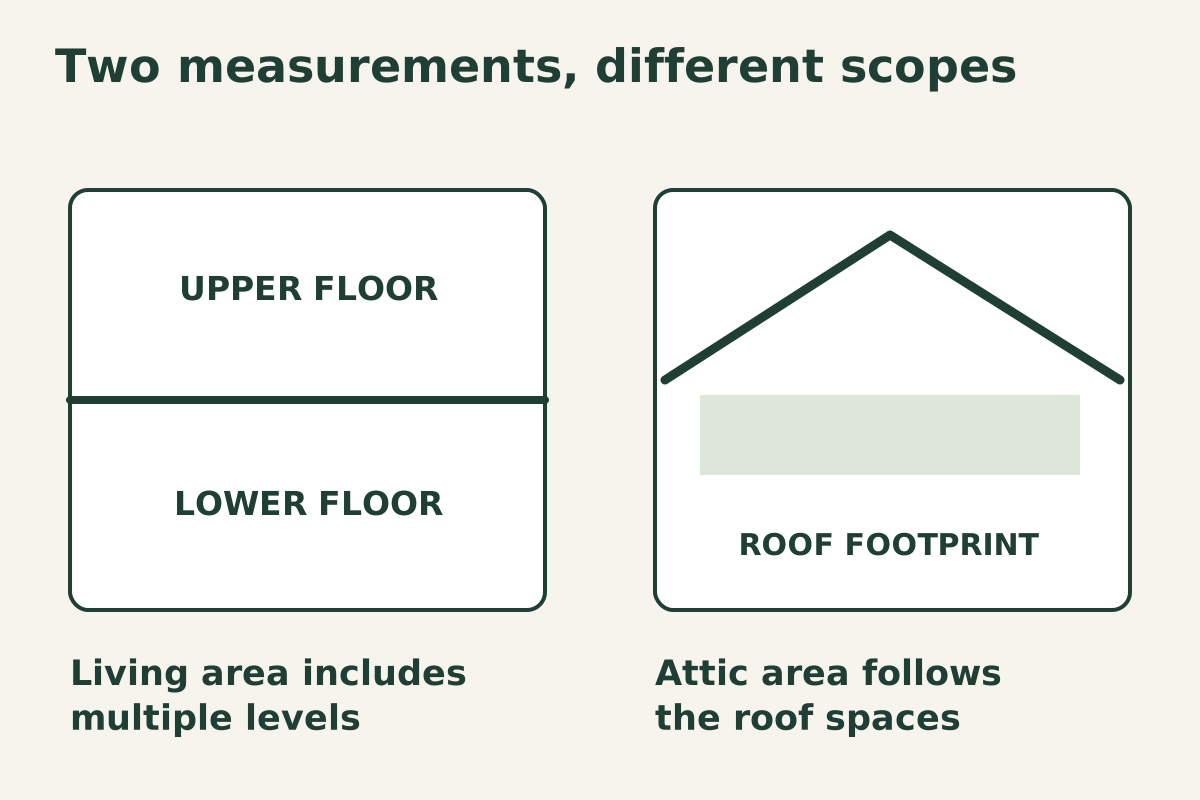
Attic area is not always living area
A house with two storeys does not necessarily have an attic matching the combined living area. An addition, garage, split-level roof or separate attic zone can also change the relevant measurement. Some parts of the roof may enclose finished space rather than a conventional open attic.
When a quote is based on an estimated area, ask what happens if the on-site measurement differs. The agreement should explain how a change is approved and how it affects the price. A clear allowance is easier to review than an unexplained adjustment after work begins.
COMPARE YOUR OPTIONS
A top-up and a replacement are different quotations
A top-up keeps suitable existing insulation and adds material after agreed preparation. A removal-and-replacement project includes additional handling and preparation before the new insulation is installed.
Neither approach should be selected from the price alone. Ask what observed condition justifies the proposed treatment. If removal is recommended because of a moisture or pest issue, establish whether the cause has been addressed and whether specialist work sits outside the insulation quotation.
The article Can you add new insulation over old insulation? explains the decision in more detail. A lower-priced top-up is not equivalent to a properly justified replacement, and a higher-priced replacement is not automatically necessary because the material is old.
PART OF THE SCOPE
Three project descriptions that lead to different scopes
An accessible open attic with suitable existing material
The main discussion may concern preparation, retained coverage and the new material required. Even here, ask about air sealing, baffles, hatch treatment and final documentation. “Top-up” is a service description, not a complete list of inclusions.
A home with additions or separate roof spaces
The contractor may need to assess more than one attic zone, work through restricted access or identify areas that require another approach. A quote should show which spaces are included so an apparently lower total does not conceal a smaller scope.
An attic with a condition that needs correction first
Roof repairs, moisture investigation, pest work or suspect-material assessment may need to happen before insulation can be quoted or installed with confidence. Ask for the sequence and the responsibility for each stage. Unrelated specialist work should not be assumed to be included in an ordinary insulation rate.
PUT IT IN WRITING
Read material and R-value specifications carefully
Ask for the proposed product and intended installed level, together with the coverage assumptions. Depth depends on the product and installation requirements. Comparing only the stated number of inches can obscure differences between materials or specifications.
Your quote should also distinguish an installation target from a program threshold or legal requirement. Those are different concepts. The R-value guide explains the terminology, and the materials page helps you compare product forms.
FOR YOUR HOME
Separate the price from the rebate
A contractor’s quoted price and a program’s rebate decision are separate matters. Confirm whether the displayed total is before or after any assumed incentive, who submits the paperwork, and when the homeowner would pay and receive any approved amount.
Do not assume eligibility from a website headline. Assessment timing, property eligibility, the existing condition, the completed upgrade and the program’s current process can affect the outcome. Check the rebate guide before authorizing work rather than trying to establish the route afterward.
THE NEXT DECISION
Commercial terms worth confirming in writing
- The included area, material, preparation and completion scope.
- Taxes, disposal charges and any separately priced work.
- How unexpected conditions or changes will be quoted and approved.
- Deposit and payment timing, where applicable.
- Access arrangements and any homeowner preparation in occupied rooms.
- Any warranty offered by the actual contractor and its written conditions.
- Who is responsible for rebate documentation or third-party coordination.
The website does not set an independent contractor’s price, warranty or payment terms. Those should be reviewed with the provider who issues the quotation and performs the work.
THE STARTING POINT
Bring the same checklist to every quote
Record the answers in one place: area, existing condition, material, installed level, air sealing, ventilation, hatch work, removal, access, cleanup, commercial terms and rebate responsibilities. Our 12-point quote comparison guide expands each item.
If a quotation omits a detail, ask for clarification rather than assuming it is included. This is particularly useful for Mississauga homes with additions, restricted roof access or more than one insulation assembly. The local home guide identifies information that can help the contractor understand the property.
YOUR QUESTIONS
Attic insulation cost questions
Can I get an estimate before an inspection?
A provider may be able to discuss a preliminary range after hearing about the project, but the assumptions and need for on-site confirmation should be clear. This website does not invent a standard range for every property.
Why do two quotes with the same R-value differ?
They may include different areas, materials, preparation, access work or commercial terms. Compare the written scope, not the headline R-value alone.
Is removal always an extra charge?
Removal is a separate part of the work, but the way it is itemized depends on the quotation. Ask whether the total includes removal, disposal, preparation and re-insulation.
Should I choose the lowest quote?
First establish whether the quoted work is comparable and appropriate. A clear scope, identified exclusions and understandable contractor terms help you make that decision.
Can I assume a rebate will reduce the amount I pay upfront?
No. Confirm the payment and reimbursement arrangements for the actual program and contractor. The quoted total should make any rebate assumption visible.